There is an instinctive assumption in online community building that bigger numbers equal greater success. We celebrate groups with thousands of members and pride ourselves on how many people click “interested” on an event page.
In the physical world, the opposite is usually true. When it comes to real-world recreational plans, bigger is not automatically better. Groups with no limit can wear out their organisers and leave some participants feeling unseen.
The right number of people for an activity is dictated by physical space, conversational bandwidth, and the specific mechanics of what you are doing together.
Beyond a certain size, an activity stops feeling like a shared experience and turns into event management.
Conversational Limits and Group Splitting
In conversational analysis and social network research—such as observational studies by Robin Dunbar and colleagues on freely forming conversation groups—researchers have consistently noted that spontaneous social discussions comfortably hold about four people, and rarely sustain more than five or six without dividing.
Once a table or walking cluster reaches seven or eight people, it almost inevitably splits into two parallel sub-conversations. When an organizer tries to force a single unified discussion across a dozen people without structured moderation, louder participants dominate, others withdraw into passive listening, and the conversational warmth disappears.
If your primary objective is conversational intimacy—such as a book club, an acoustic jam, or trying a new neighbourhood café—capping attendance between four and six participants often produces the most natural and engaging dynamic.
Physical Mechanics and Sports Ratios
For physical sports and recreational pastimes, the court or turf dictates the headcount with mathematical precision:
- Badminton or Tennis: Exactly four players for doubles. Inviting six players works if you plan regular rotations, but inviting nine means half the group spends most of the time sitting out.
- Turf Football: A 5-a-side or 7-a-side match requires 10 to 14 players. Having two rolling substitutes per team keeps the pace lively, but having thirty people on one small pitch leads to frustration.
- Cycling Packs: On Indian city roads, a group of 6 to 12 cyclists is easier to keep together in single or double file. A peloton of forty requires traffic marshals, multiple ride leads, and emergency support vehicles.
When everyone has a clear role or active court time, commitment remains consistently high.
The Three Natural Group Sizes
Rather than treating numbers as arbitrary, organizers can think in terms of three distinct operational tiers:
1. The Intimate Circle (3 to 6 People)
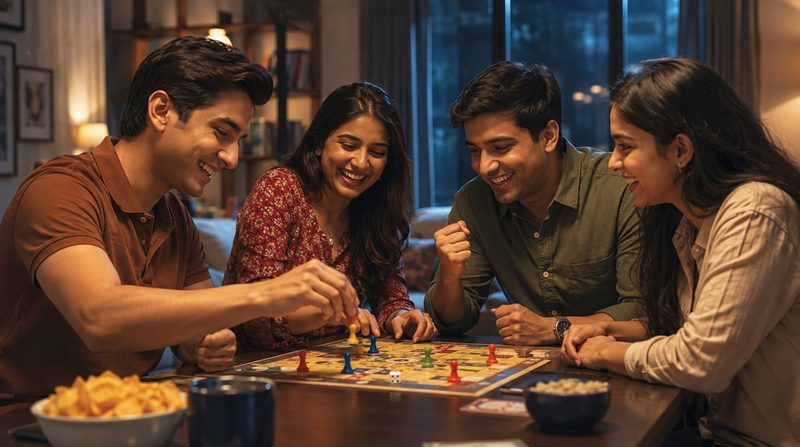
Zero coordination overhead. No microphones, no formal introductions, no assigned roles. Everyone participates equally. Perfect for dinners, board games, and quiet trail walks.
2. The Micro-Community (8 to 16 People)
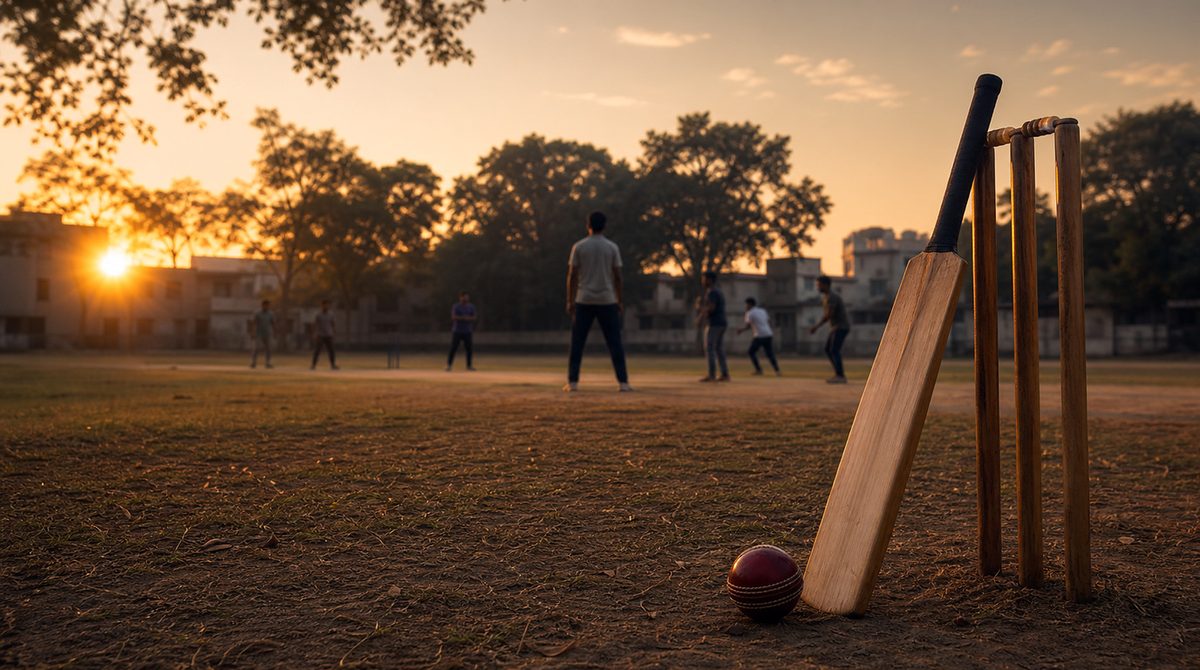
This is often the sweet spot for recreational sports, book swaps, and skill workshops. The group is large enough to survive a couple of last-minute cancellations without collapsing, yet small enough that the host knows everyone’s name by the end of the session. Sub-groups form and mix fluidly.
3. The Open Assembly (20+ People)
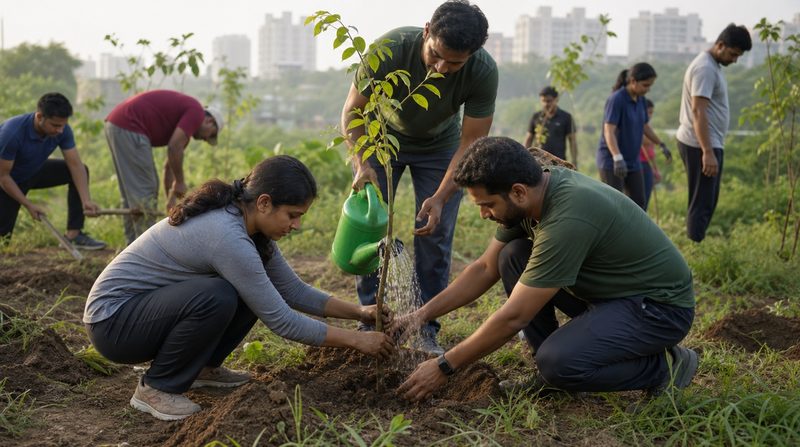
Tree plantation drives, park cleanups, open yoga sessions, or heritage monument walks. At this scale, the host must step into a distinct facilitation role. You need designated gathering points, a clear schedule, and an awareness that people will socialize primarily with the two or three people standing immediately beside them.
In busy urban settings, last-minute traffic delays, long commutes, and family obligations mean that informal hobby meetups often face dropouts—many experienced organizers anticipate that a portion of interested participants may not be able to attend on the day.
- Don’t overbook wildly: If your venue holds eight people, approving fifteen RSVPs in hope of dropouts risks turning away confirmed guests if everyone arrives.
- Keep a backup list: When your activity reaches its limit, let interested neighbours know they can step in if someone drops out, rather than overfilling the session.
- Send a gentle morning check-in: A simple “Looking forward to seeing you all at 7 AM—please update your RSVP if your plans have changed” gives people permission to be honest early.
How AldSocial Balances Headcounts
On AldSocial, organizers are not forced into rigid molds. When posting an activity, hosts can:
- Set exact participant caps: Keep groups from growing beyond what the space and the activity can hold.
- Choose private or open formats: Keep an activity private for the people you invite, or make it public so nearby people can ask to join.
- Specify skill and format context: Help participants self-select based on their own fitness or comfort level.
By choosing a group size that respects both the activity and the space, you create an environment where connections have room to form and everyone feels glad they showed up.