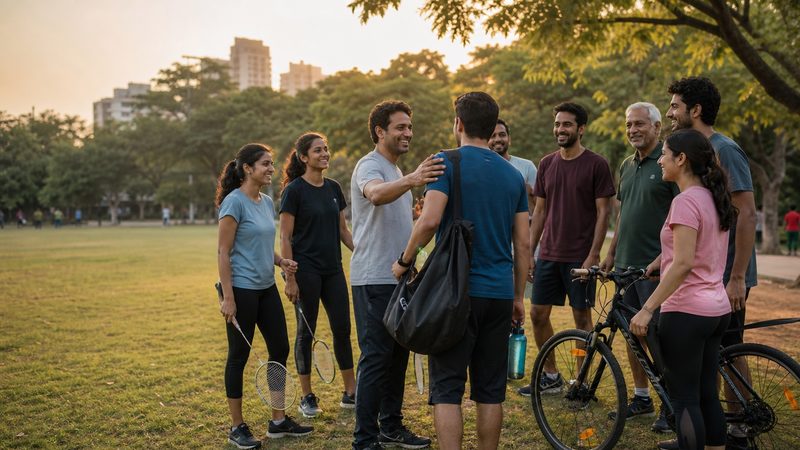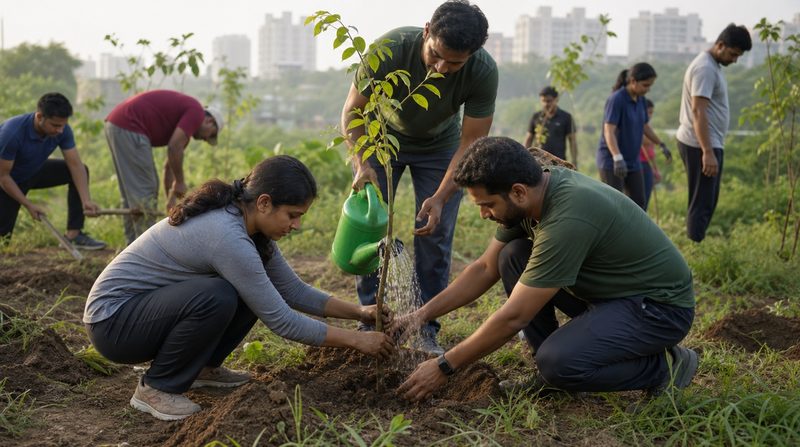
Almost everyone who moves to a new neighbourhood—or simply wants to pick up an old sport—encounters the same quiet obstacle: you are ready to play, but you have nobody to play with.
You might want to play badminton twice a week, join a Sunday cycling ride, visit a photography exhibition, or try a heritage walk. Yet your colleagues commute in the opposite direction, your college friends live across the metropolis, and your family has different weekend routines.
The usual advice is to “put yourself out there.” In practice, that often leads to posting in massive residential WhatsApp groups, asking on anonymous local forums, or scrolling through bloated event pages where sixty people RSVP and three show up.
There is a simpler, more comfortable approach.
Why General Inquiries Almost Always Fail
When people attempt to find activity partners, they often start with broad, open-ended questions:
“Anyone free this weekend to hang out?”
“Looking for fitness buddies in Gurgaon Sector 56.”
“Would anyone like to do something creative sometime?”
These invitations rarely produce results, not because people are unfriendly, but because the invitation asks the reader to solve three problems at once: decide what to do, figure out when to do it, and commit to an undefined social setting.
A successful invitation inverts this dynamic. It defines the activity, the location, and the timeframe with precision, while keeping the social expectation low and manageable.
The activity gives people a reason to come together. Specificity lowers the barrier to showing up.
Start with a Small, Self-Contained Activity
If you want to find people for badminton, do not propose creating a weekly league. Propose a single one-hour game at a specific local court on a specific evening.
A self-contained plan has several natural advantages:
- Clear commitment: It has a definite start and finish. Nobody worries about being trapped in an awkward social situation for three hours.
- Natural focus: Your attention is directed at the court, the walking path, or the game board. You do not need to prepare conversational topics.
- Zero future obligation: If the rapport feels natural, you can plan a second game. If either person prefers not to continue, both can move on without friction.
Choose Low-Stakes, Public Venues
When meeting someone new for an activity, venue choice is foundational to comfort and trust.
Public, well-used places are usually best:
- Sports: A community sports complex, a booked turf, or a local badminton academy with reception staff.
- Outdoors: Well-frequented public parks such as Lodhi Garden or Nehru Park during morning daylight hours.
- Social & Hobbies: A quiet corner table at an open neighbourhood café for board games or book discussions.
Public spaces remove ambiguity. While no physical setting or digital tool can guarantee safety, choosing open, well-frequented public locations provides visibility, predictable foot traffic, and clear expectations for both people.
State the Practical Details Upfront
Misunderstandings around logistics create hesitation. Whenever you announce or look for an activity, be explicit about four practical details:
Essential Activity Details
- Activity & Skill Level: “Badminton (casual / beginner rallies, not tournament level).”
- Exact Venue & Meeting Point: “Siri Fort Sports Complex, Court 3 entrance.”
- Date, Time & Duration: “Saturday, 7:30 AM to 8:30 AM.”
- Cost Sharing: “Shuttlecocks split equally on UPI (approx. ₹50 per person).”
When these details are transparent, people can immediately assess whether the plan fits their schedule and budget, avoiding back-and-forth negotiation.
Private Plans or Open Gatherings: Choosing Your Format
Sometimes you already know one or two people and simply need one more person to complete a doubles match or a four-player board game. Other times, you are on your own and looking to join an existing group.
Private plans are ideal when you want to invite existing contacts first, keeping control over who sees the details. If a spot remains open, you can choose to have the activity suggested to nearby people whose preferences match.
Open activities work best when you want to discover enthusiasts nearby who share a particular interest—whether that is trail running, weekend cycling, or bird watching. In open activities, the host reviews each request before anyone joins.
How AldSocial Makes This Straightforward
Navigating chaotic chat groups where messages get buried under jokes and forwards is exhausting. AldSocial was created to reduce that friction:
- Activity-first discovery: Browse or post activities by category—from badminton and running to board games and pottery.
- Mutual comfort: Preferences for age group, interests and distance help you discover people whose preferences align with yours.
- Host controls: Organizers review join requests, manage attendance limits, and coordinate details in the activity’s own group chat, which becomes read-only some time after the activity ends.
Ready to Find Your Next Activity?
Browse local sports, walks, and creative gatherings happening in your neighbourhood this week. No spam, no chaotic chat groups.
Explore Activities Near You